

The dental agenesis Dental agenesis is the congenital absence of one or more teeth (primary or permanent) due to their lack of formation. It affects 3-101% of the population, being most common in third molars, upper lateral incisors, and premolars. It can be corrected with orthodontics, implants, bridges, or prostheses to improve aesthetics and occlusion. If you would like to expand your clinical understanding of this problem, you can consult this explanation of what dental agenesis is and this one. guide Regarding dental agenesis and its treatment, popular clinical literature agrees that it is a disturbance of relatively frequent dental development, especially in permanent dentition.
It may seem like a purely cosmetic problem, but it's not. When a tooth is missing from its formative stage, the bite changes, spaces are altered, some teeth shift, and treatment planning requires far more precision than many people imagine. That's why, when we talk about dental agenesis, It's not enough to simply "fill the gap." We need to assess age, the position of the missing tooth, growth, gum health, available bone, and the overall balance of the mouth. At a clinic like Acedo Dental, where they offer treatments such as invisible orthodontics, dental implants, children's dentist and Dental CT and iTero scanner, The key is to study the case well before deciding.
What exactly is dental agenesis?
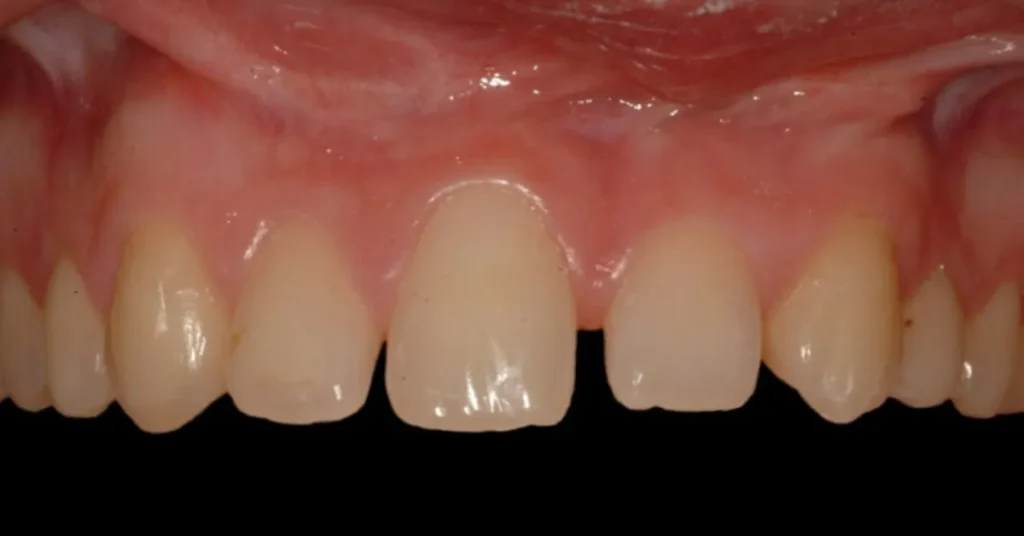
The dental agenesis This means that one or more teeth have not fully formed. They are not hidden, delayed, or misaligned; the tooth germ that should have developed into that tooth simply does not exist. The clinical sources consulted agree that it can affect primary or permanent teeth, although it is more common in permanent teeth. They also indicate that the most frequently missing teeth are the third molars, the upper lateral incisors, and certain premolars.
Hypodontia, oligodontia and anodontia
When only a few teeth are missing, it is usually referred to as hypodontia. When the absence affects six or more pieces, the usual term is oligodontia. And when no teeth develop, which is much less common, it is called... anodontia. This classification appears in the informational guides consulted and is useful because not all cases of dental agenesis They are not equally serious nor do they require the same approach.
In practice, most patients who consult for this reason do not reach extreme situations. The most common issue is the detection of one or more missing teeth, especially during adolescence or when monitoring the development of permanent teeth.
Why does dental agenesis occur?
The primary cause is usually genetic. The sources reviewed reiterate this idea quite clearly: if there is a family history, the likelihood of developing the condition increases. dental agenesis It increases. Furthermore, in some cases it can be associated with syndromes or developmental disorders, such as certain ectodermal dysplasias or Down syndrome. Environmental factors or early developmental disorders that could influence it in some cases are also described.
However, it's important not to oversimplify. Saying that "it's genetic" doesn't mean that all cases have exactly the same cause, nor that there's always a clear family history. Sometimes the patient is the first to notice the problem and doesn't recall any family member with a similar condition.
Which teeth are most commonly missing
In dentistry, not all teeth have the same probability of presenting dental agenesis. The clinical content consulted agrees in pointing out three particularly common groups:
Third molars
Wisdom teeth are the teeth whose congenital absence is most frequently observed. In fact, many people don't even realize that this is a dental agenesis, because the idea of not having all four wisdom teeth has become quite normalized socially.
Upper lateral incisors
This is where it's usually more noticeable. When an upper lateral incisor is missing, the smile changes, gaps appear, and the aesthetic harmony suffers. Furthermore, it often forces a decision between closing the gaps with orthodontics or leaving them for future rehabilitation.
Premolars
Certain premolars, especially the lower ones in some popular classifications, are also among the most common missing teeth. Although they may seem less important than a front tooth from the outside, they can alter the bite and the distribution of forces during chewing.
How to know if you have dental agenesis
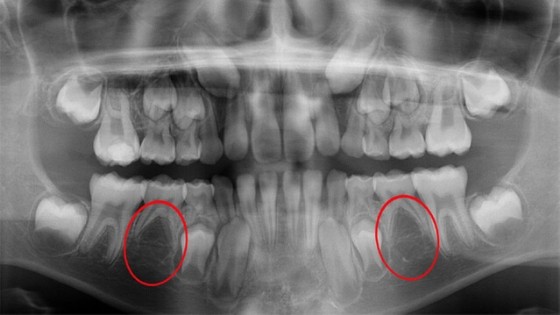
In many cases, the first sign is that "a tooth isn't erupting." The child or teenager retains a baby tooth longer than expected, or a gap appears that isn't filled. In other cases, the dentist notices during a checkup that the eruption isn't following the usual pattern and orders imaging tests.
Confirmation should not be done visually. The reviewed sources emphasize the importance of clinical examination and radiography to determine whether or not the tooth germ is present. In other words, to know if the tooth is impacted, delayed, or truly missing. dental agenesis.
In more complex cases, it may be helpful to supplement the study with advanced diagnostic technology. Acedo Dental indicates on its website that it has Dental CT and iTero scanner, tools that help to plan orthodontic, rehabilitation and implant treatments more accurately.
What problems can dental agenesis cause?
This is where many people fall short in their analysis. To think that the dental agenesis "It only affects the aesthetics" is a mistake.
Bite abnormalities
When a tooth is missing, neighboring teeth may tilt or shift to fill the space. Additionally, the opposing dental arch may change its usual contact. This alters the occlusion and can lead to a less stable bite. The reviewed sources specifically highlight that missing teeth affect oral function.
Aesthetic problems
If the missing piece is on the front panel, the visual impact is obvious. This frequently occurs in the dental agenesis of the upper lateral incisors. The smile loses symmetry and sometimes the patient avoids smiling or feels insecure when speaking or having their picture taken.
Functional difficulties
Depending on the location, There may be changes in chewing or even in the pronunciation of certain sounds. The reviewed informational sources mention alterations in bite and speech as possible consequences if the problem is not corrected in time.
Uneven wear and overload
When one part of the mouth compensates for a missing tooth, another part can end up working harder than necessary. This doesn't always cause immediate pain, but it can lead to imbalances in the medium term.
The importance of detecting dental agenesis early
An early diagnosis allows time for planning. And in dental agenesis, Planning makes a big difference to the outcome.
If the patient is still growing, some decisions should wait, while others should be made sooner. For example, keeping a primary tooth in good condition for a while can be helpful. In other cases, it's more appropriate to use... invisible orthodontics or other types of orthodontics to redistribute space and prepare the mouth for future rehabilitation. The reviewed sources emphasize that early diagnosis improves planning and reduces subsequent aesthetic and functional problems.
In children and adolescents, this is directly linked to the importance of regular check-ups and follow-up. pediatric dentistry. Acedo Dental presents this service as a specific care for the little ones, which fits especially well in dental development problems such as this one.
Treatments for dental agenesis
There is no single solution that works for all patients. This needs to be said clearly, because it's easy to find overly simplistic explanations online. The best treatment for dental agenesis It depends on the age, the missing tooth, the amount of space, the condition of the bone, and the aesthetic and functional objective.
Orthodontics to close or redistribute spaces
Orthodontics is one of the most widely used tools in dental agenesis. In some cases, it allows for closing the space of the missing tooth and reorganizing the adjacent teeth to achieve a functional and visually harmonious result. In others, it serves the opposite purpose: opening or maintaining adequate space for future restoration. The reviewed sources highlight this combined approach as one of the most common options.
At Acedo Dental, the page of invisible orthodontics He explains that they offer this type of treatment in Seseña and El Barco de Ávila. This can be especially useful when the case requires controlled and planned tooth movement before a definitive solution.
Dental implants
When bone growth has finished and conditions are suitable, the dental implants They are a very solid solution for replacing missing parts. dental agenesis. The sources consulted describe them as an advanced and long-lasting option, especially useful for adult patients. Acedo Dental, for its part, explains that its implants are titanium fixtures placed in the jawbone to replace missing tooth roots.
However, it's not advisable to sell implants as an automatic solution. It's necessary to assess whether the space, gum tissue, bite, and timing of the treatment are appropriate.
Bridges
Bridges remain a valid alternative for certain patients. They can replace a missing tooth without surgery, although they require careful assessment of the condition of the adjacent teeth. The informational sources consulted include this option among the classic solutions for... dental agenesis.
Prosthesis
In specific situations, especially when several teeth are missing or the case requires a temporary or combined solution, different types of prostheses can be used. This is not always the first option for a young patient with a localized gap, but it is part of the range of treatments described in the reviewed sources.
Combined treatments
Often, the most sensible solution is not a single technique, but a combination. Orthodontics to align and manage spaces, temporary retention of a primary tooth, planning with CT scans, and, when necessary, rehabilitation with implants or prosthetics. The sources consulted emphasize precisely that the dental agenesis It usually requires a personalized and multidisciplinary approach.
Dental agenesis in children, adolescents, and adults
In children
The goal is usually to detect the problem early and monitor its progression. Sometimes definitive treatment isn't yet necessary, but it's important to plan it well and avoid hasty decisions.
In adolescents
This is a crucial stage because many missing teeth become apparent during the transition from permanent teeth to permanent teeth. Orthodontics plays a significant role at this point, whether to close gaps or to prepare for the future.
In adults
In adult patients, the dental agenesis It can occur without prior treatment or after years of living with an impacted primary tooth. In these cases, definitive rehabilitation with implants, bridges, or combined solutions is usually considered more directly, always after a thorough evaluation.
What happens if dental agenesis is left untreated?
Not all cases progress the same way, but leaving one dental agenesis Untreated missing teeth can lead to tooth shifting, bite problems, more noticeable aesthetic issues, and more complex treatment in the future. The sources reviewed warn that untreated missing teeth can affect oral function and the position of the remaining teeth.
In other words: waiting too long doesn't always simplify things. Sometimes it complicates them.
How to study a case of dental agenesis in a clinic
A well-handled case shouldn't be resolved with a quick decision. The reasonable approach is to follow a process:
- complete clinical examination
- X-rays to confirm the absence of the tooth
- bite and space study
- aesthetic assessment of the smile
- planning according to age and growth
- choice of the most conservative and stable treatment possible
At Acedo Dental, the combination of Dental CT and iTero scanner, invisible orthodontics e dental implants It allows for the creation of different therapeutic scenarios according to the needs of the patient in El Barco de Ávila.
Patient's opinion
“For years I hadn’t understood why I hadn’t gotten a permanent tooth and I thought it was just a cosmetic issue. When they explained that it was dental agenesis, I understood that it was also affecting my bite. What I appreciated most was that they calmly explained several options to me and gave me a clear plan before starting.”
Frequently asked questions about dental agenesis
Is dental agenesis hereditary?
There is often a genetic component. The clinical sources consulted agree that heredity is one of the main causes.
Does dental agenesis hurt?
The dental agenesis It doesn't hurt in itself, because the problem is that the tooth hasn't formed. What can cause discomfort later on are bite problems or associated complications.
Can it be detected in children?
Yes. In fact, the earlier it's detected, the better the treatment can be planned. Checkups and X-rays are essential to confirm it.
Is an implant always necessary?
No. In some cases, the gap can be closed with orthodontics. In others, it is advisable to treat it with an implant, bridge, or prosthesis. It depends on the case.
Which specialist treats dental agenesis?
It usually requires a complete dental evaluation and, in many cases, a combined approach involving orthodontics, rehabilitation, and implantology.
Does dental agenesis affect aesthetics?
Yes, especially when there's a lack visible teeth such as the upper lateral incisors.
Can it be treated in adolescents?
Yes, and in fact it is a very important stage for planning the case correctly, especially from an orthodontic point of view.
What happens if I keep a baby tooth for many years?
This can happen when the permanent tooth is missing due to dental agenesis. That temporary tooth can be kept for a while, but it should be checked to decide whether it should be kept, if spaces should be moved, or if another solution should be planned.
Even a short absence can require extensive planning.
The dental agenesis At first glance, it seems like a simple problem: a missing tooth. But in reality, it's an issue that can affect the aesthetics, bite, and stability of the entire mouth if not properly assessed. The good news is that today there are very effective solutions, from orthodontics to implants or combined treatments, provided the right strategy is chosen for each patient.
If you want to have your case assessed with a personalized approach, you can learn more about the Acedo Dental Clinic and review treatments such as invisible orthodontics, dental implants either children's dentist. In a problem like this, making the right decision from the start matters much more than rushing.
Book your appointment today and wear a smile healthy, without discomfort and radiant to be proud of.
How can I book my appointment?
Booking your free appointment is very simple:
If you are in Seseña:
- Address: Calle Tirso de Molina 22, 45223 Seseña
- Phone: 669 956 658
If you are in El Barco de Ávila:
- Address: C. del Abanico, 10, Local 1, 05600 El Barco de Ávila, Ávila
- Phone: 606 886 468
Our customer service team will assist you with kindness and help you schedule your appointment at a time that best suits you.
We will wait for you!
