Acedo Dental is the reference as a children's dentist in Seseña and El Barco de Ávila. We believe that children should enjoy the experience of going to the dentist without fear or complexes..
Pediatric dentistry is the specialty of dentistry responsible for treating children.. It is important that children are explored at an early age, between 3 and 5 years old. In this way, the child will have positive contact with the dentist and it will be easier for him or her to attend their periodic check-ups.
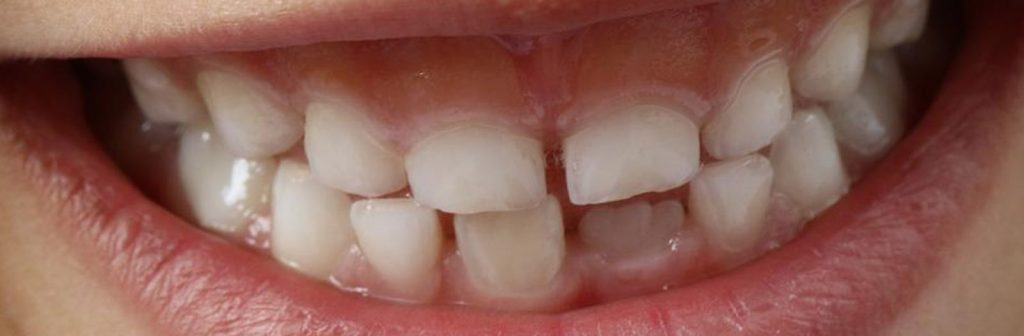
Around 6-7 years of age, it is mandatory that the child be examined, since it is an important moment of growth and it is usually at this age, when the first permanent tooth erupts. At this age you can begin to detect abnormalities in the jaws and in the position of the teeth. If so, it will be the orthodontist who will indicate the most appropriate treatment to correct it. If an orthodontic problem is detected, it is important to treat it when it is growing, since the bone is being formed, it is easier to expand it and thus shorten the duration of the treatments.
We will clean the baby's mouth with a clean gauze pad, gently wiping their gums and massaging them lightly. This will remove any milk residue and, by massaging, will soothe the discomfort of teething.
Dentist from age 2:
We will use soft-bristled children's toothbrushes. We will let the child practice, and then the parents will finish by going over the entire mouth. This way, we will encourage the child to learn good hygiene habits.
It will only be applied toothpaste from of the 3 years, which is the age at which we learn to rinse properly. Children's toothpaste should always be used (adult toothpaste has a higher concentration of fluoride and can be toxic to children), and a small amount should be placed on the brush, since if a larger amount is ingested it can cause stomach discomfort.
Dentist from 6-7 years old:
They will be able to perform their own dental hygiene, although parents should supervise them to ensure they do it correctly and at least three times a day. There are products called plaque disclosing tablets; after brushing, these are placed in the mouth and stain the dental plaque, revealing areas where brushing has failed.
For children to maintain good dental hygiene, they must receive positive reinforcement from their parents, ensuring that brushing their teeth is not a source of conflict, and, most importantly, that they see their elders as an example to follow.

To prevent the appearance of cavities, in addition to good hygiene habits and a balanced diet, at least twice a year, the dentist will place trays with fluoride for medical use. The fluoride in contact with the teeth reacts with their calcium, forming calcium fluoride which, together with the hydroxyapatite of the dental enamel, results in a compound that increases the resistance of the enamel and favors its remineralization. It also has a bacterial action, attacking the bacteria that colonize the surfaces of the teeth.

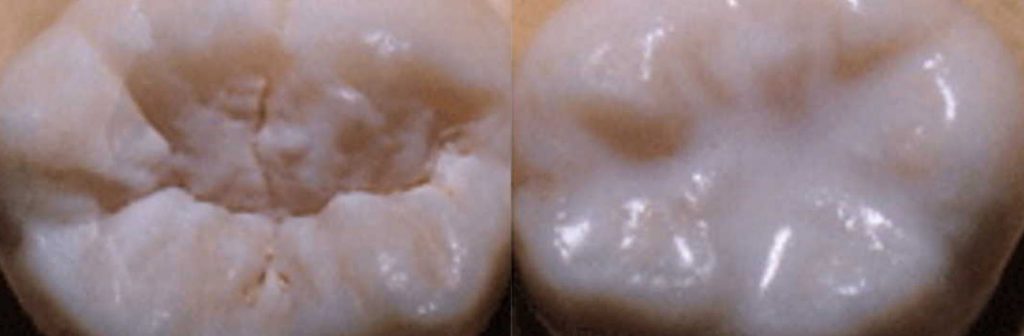
It is a plastic material (resin), which is applied in the pits and grooves of molars and premolars, very marked and deep as they are very young pieces. Normally it is in this area, where bacteria begin to filter, eroding the dental enamel. It is a very simple non-invasive method for the prevention of the dreaded cavities.