
Have you ever wondered why you might feel tingling or numbness in your mouth after dental treatment? That's called dental paresthesia, a rare side effect that causes a lot of concern for patients. In this article, we'll explain What it is, why it occurs, how it is diagnosed and what treatments exist, so you can resolve any questions you may have. For more general medical information on this type of sensory disturbance, you can consult This article from MedlinePlus.
Dental paresthesia is an alteration of sensitivity, such as numbness, Tingling or burning sensations in the lips, tongue, gums, or jaw are caused by injury to or compression of a nerve during dental procedures, especially wisdom tooth extractions. Although often temporary and resolving on its own, it is crucial to seek prompt dental attention if these symptoms occur to determine the cause and receive appropriate treatment, which may include vitamins or medication..

Table of Contents
- What is dental paresthesia: tingling in the mouth and lips
- Causes of tingling in the mouth
- Most common symptoms of dental paresthesia
- How is it diagnosed?
- Treatments for dental paresthesia
- Dental paresthesia: recovery and prognosis
- Prevention of dental paresthesia
- Tips to promote the recovery of the dental nerve
- Patient's opinion
- Frequently asked questions about dental paresthesia
- How long does dental paresthesia last?
- Is it dangerous?
- Does dental paresthesia heal on its own?
- What should I do if I experience numbness after an implant?
- Can anesthesia cause permanent paresthesia?
- Why do I feel tingling in my gums?
- How long does dental paresthesia last?
- Can a damaged dental nerve be recovered?
- What causes tingling in the mouth and lips?
- What to do if you notice dental paresthesia
What is dental paresthesia: tingling in the mouth and lips
The dental paresthesia It is an alteration of sensitivity that affects the nerves of the mouth, especially in the lips, gums, tongue and teeth.
Patients often describe it as:
- Tingle.
- Numbness.
- Sensation of electric current.
- Partial numbness.
It differs from a normal toothache because in this case It does not hurt, but it changes the perception of the affected area.
Causes of tingling in the mouth
Dental paresthesia can have various causes. The most common are:
Dental interventions
- Dental implants: the placement of a implant near the inferior alveolar nerve can cause pressure or irritation.
- Wisdom tooth extractions: especially the lower ones, since they are very close to sensitive nerves.
- Endodontics: when the ducts are close to the nerve.
Medical factors
- Jaw trauma.
- Advanced oral infections.
- Neurological or metabolic disorders.
Drugs and anesthesia
- Reaction to certain medications.
- Use of local anesthesia in the mandibular area.
Most common symptoms of dental paresthesia
A patient with dental paresthesia may experience:
- Numbness in the lower lip.
- “Pins” sensation in the tongue.
- Partial loss of sensitivity in the gums.
- Difficulty perceiving temperature or pressure on one side of the mouth.
These symptoms may be transient or prolonged, depending on the cause.
How is it diagnosed?
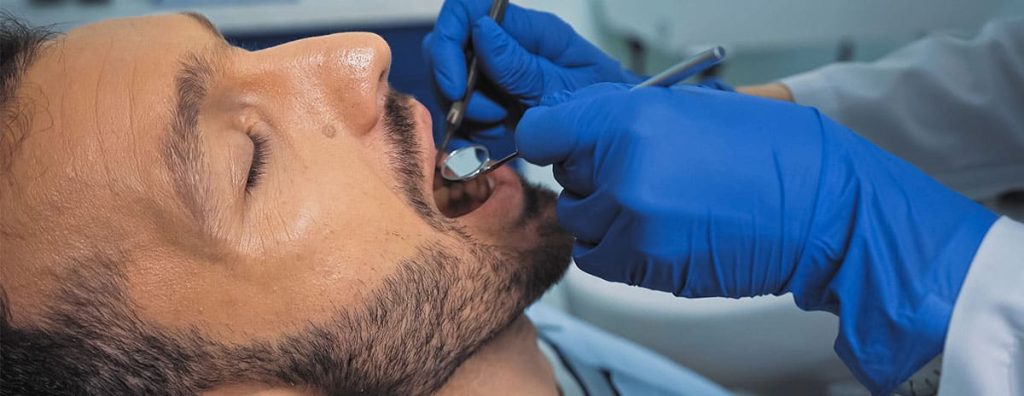
The diagnosis of dental paresthesia requires a complete clinical evaluation:
- Detailed medical history: medical and dental history.
- Physical examination: sensitivity tests in the area.
- Dental X-rays and CT scans: very useful for identifying the relationship between nerves and dental roots.
- Neurological tests in persistent cases.
Treatments for dental paresthesia
Treatment depends on the origin of the paresthesia:
Observation and time
In many cases, paresthesia is temporary (for example, after anesthesia). It usually disappears within weeks or months.
Medication
- Anti-inflammatories.
- B vitamins to improve nerve regeneration.
- Corticosteroids in specific cases.
Physiotherapy and stimulation
Sensitivity and nerve stimulation exercises to speed recovery.
Surgery
In severe cases or cases of severe nerve damage, microsurgical repair may be necessary.
Dental paresthesia: recovery and prognosis
- Duration: can be resolved in days or take months.
- Key factors: patient's age, type of treatment performed and proximity to the nerve.
- Recommendation: always go to reviews periodically to monitor progress.
Prevention of dental paresthesia
Although it cannot always be avoided, there are preventive measures:
- Perform prior radiological studies before implants or extractions.
- Trust an experienced dental team.
- Go to clinics that have advanced technology in diagnosis and surgical planning.
Tips to promote the recovery of the dental nerve
In addition to the treatment prescribed by your dentist, you can help your body recover by following these tips:
- Avoid pressing or biting the anesthetized area.
- Maintain good oral hygiene without irritating the affected area.
- Include foods rich in B vitamins, which promote nervous health.
- Attend scheduled check-ups to monitor your progress.
Patient's opinion
"I had a lower lip implant, and for the first few months, my lip felt numb. I was very worried, but the clinic monitored me closely. Over time, the sensation disappeared, and now I'm delighted with the result."
– Testimony of a satisfied patient Dental Clinic I ace.
Frequently asked questions about dental paresthesia
How long does dental paresthesia last?
It can last from a few hours to several months, depending on the cause.
Is it dangerous?
It is generally not dangerous, but it does require monitoring to rule out complications.
Does dental paresthesia heal on its own?
In many cases it improves over time, but in others it may require specific treatment.
What should I do if I experience numbness after an implant?
Contact your dentist for a checkup and follow-up.
Can anesthesia cause permanent paresthesia?
It is very rare, but there are documented cases.
Why do I feel tingling in my gums?
Tingling in the gums is often a symptom of paresthesia, an altered sensitivity that can occur after certain dental treatments, such as extractions or the placement of crowns. implantsThis tingling sensation is caused by irritation or compression of the nerves surrounding the treated area. In most cases, it is temporary and improves over time, although it is advisable for the dentist to evaluate the exact cause to rule out deeper nerve damage and offer the appropriate treatment.
How long does dental paresthesia last?
The duration depends on the cause and the affected area. In mild cases, tingling or numbness usually disappears within a few days. weeksIf the nerve has been more severely damaged, recovery may take longer. several monthsHowever, in most patients sensitivity is gradually restored.
Can a damaged dental nerve be recovered?
Yes, in many cases the nerve is not completely damaged, only irritated or compressedWith time and appropriate treatment (monitoring, anti-inflammatories, or jaw physiotherapy), Nerve function recoversIn more severe cases, the dentist may order further tests or refer the patient to a maxillofacial surgeon.
When should you worry about dental paresthesia?
You should consult your dentist again if After more than two or three weeks you don't notice any improvementor if the lack of sensitivity extends to the tongue, lips, or chinIt's also important to seek medical attention sooner if you experience sharp pain, changes in speech, or difficulty chewing. Early diagnosis can prevent complications and speed up nerve recovery.
What causes tingling in the mouth and lips?
Tingling in the mouth and lips can have many causes, ranging from mild and temporary situations to conditions that require further evaluation. In many cases, it is related to local irritations, dry mouth, allergic reactions to food, cosmetics, or oral hygiene products, or minor trauma following dental procedures. It can also be caused by nutritional deficiencies, especially of B vitamins, iron, or calcium. In other cases, tingling may be associated with neurological problems, anxiety, hyperventilation, or circulatory issues. If the sensation is persistent, recurs frequently, or is accompanied by other symptoms such as pain, loss of sensation, swelling, or difficulty speaking, it is important to consult a healthcare professional to identify the exact cause and rule out more serious problems.
What to do if you notice dental paresthesia
Dental paresthesia can be unsettling, but with early diagnosis, adequate follow-up and an experienced professional teamMost cases resolve without after-effects. If you notice any changes in sensitivity in your mouth, don't hesitate to consult your dentist.
Book an appointment with us and regain the functionality, aesthetics, and confidence of your smile.
Your smile also deserves to travel without worries!
📍 Tirso de Molina Street, 22, Seseña
📍 Calle Abanico, 10, Local 1, El Barco de Ávila
📞 669 95 66 58
📞 606 886 468
📧 info@acedodental.com
🌐 clinicasacedodental.com
Make your appointment today and discover the power of a well-groomed smile.
