

If you are thinking about starting an orthodontic treatment or you already wear braces, it is essential that you know the restrictions and care necessary to ensure an effective and uncomplicated process. In this blog, we will explain in detail which foods you can eat and which you should avoid, as well as offering you some tips practical tips to keep your braces in optimal condition.

- What is the proper diet with braces?
- What to avoid eating with braces
- Weekly menu of recipes for eating with braces
- Tips for caring for braces
- Tips for preparing food if you wear braces
- Frequently asked questions about eating with braces
- How long does it take to get used to braces?
- Can I play sports with braces?
- What do I do if a bracket comes loose or breaks?
- Can I continue using my electric toothbrush?
- Is it normal to feel pain after an adjustment?
- Can I eat oranges if I wear braces?
- Can I eat catfish if I wear braces?
- When should a child go to the dentist for the first time in Madrid?
- What treatments does a pediatric dentist perform in Madrid?
What is the proper diet with braces?
One of the most important aspects to consider when wearing braces is your diet. Some foods are better suited than others to maintaining the health of your teeth and braces.
Soft and easy to chew foods
When you've just gotten braces or after an adjustment, your teeth may be more sensitive. Opt for soft, easy-to-chew foods such as:
- Soups and broths: They help maintain a balanced diet effortlessly.
- Mashed potatoes: Its soft texture is ideal.
- Yogurt: Rich in calcium and easy to consume.
- Scrambled eggs: Soft and full of protein.
Cooked fruits and vegetables
Fruits and vegetables are essential in any diet, but when you wear braces, it's best to eat them cooked or pureed. Some options include:
- Bananas: Soft and easy to consume.
- Applesauce: An excellent source of vitamins.
- Cooked carrots: They are easier to chew and do not damage the braces.
Dairy
Dairy products are ideal when you wear braces because of their gentleness and calcium content. Try:
- Milk and shakes: They keep your teeth and braces in good condition.
- Soft cheese: Like cream cheese or ricotta.
Tender and well-cooked meats
Meats can be eaten if they are well cooked and tender, such as:
- Ground meat: Prepared in hamburgers or meatballs.
- Shredded chicken: Easy to chew and digest.
- Fish: Gentle and an excellent source of omega-3.
What to avoid eating with braces
Just as there are recommended foods, there is also a list of foods you should avoid to prevent damage to your braces and wires.
Hard and crunchy foods
These foods can cause braces to come loose or wires to bend. Some examples include:
- Hard crackers and pretzels: They can damage the orthodontic components.
- Nuts and seeds: Its hardness can break brackets.
- Hard candies: In addition to being difficult to chew, they can get caught in the braces.
Sticky foods
Sticky foods are especially problematic because they can stick to brackets and wires, causing plaque buildup and possible cavities. Avoid:
- Honey and corn syrup: They can get stuck and are difficult to remove.
- Chewing gum: They can get caught in brackets and wires.
- Jelly beans and toffees: Difficult to clean and very sticky.
Foods that require a strong bite
Biting down hard on hard foods can damage braces. Avoid:
- Raw carrots: Like apples, they are best cut up or cooked.
- Corn on the cob: Opt for shelled corn.
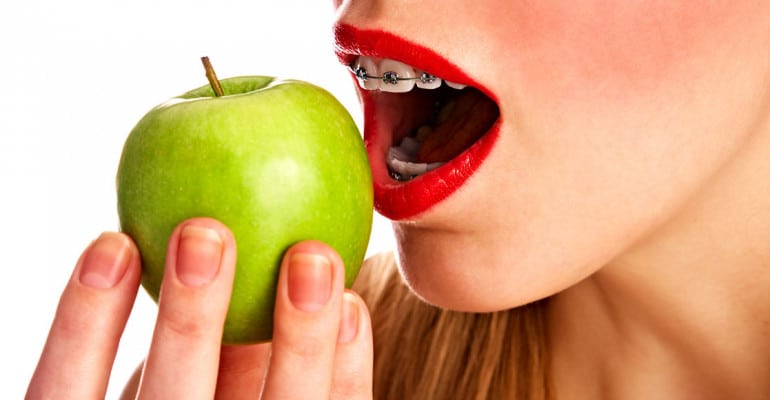
- Whole apples: If you love apples, cut them into small pieces.
Sugary and carbonated drinks
Sugary and carbonated drinks are not only bad for your teeth, but they can also affect your braces. Avoid:
- Acidic fruit juices: Such as orange or lemon, which can cause sensitivity and damage enamel.
- Soft drinks and energy drinks: Sugar and acids can erode tooth enamel.
Recommended foods for children with braces during the early stages of treatment and why they help prevent discomfort and breakage
In the first few weeks of treatment, braces can cause sensitivity and pressure on the teeth, so food choices make a significant difference to the child's comfort and the longevity of the braces. Ideally, opt for soft foods that are easy to chew and don't put pressure on the brackets. Purees, creamed vegetables, cooked rice, soft pasta, white fish, omelets, yogurt, and ripe fruits like bananas or peaches are all safe options.
It is also advisable to avoid sticky foods—such as candies, chewing gum, or sweets—and other very hard foods—whole nuts, uncut apples, sandwiches with a rigid crust—because they can cause detachment or deformation of the arches.
This guide is useful for parents looking to maintain a varied and adequate diet while their child adapts to orthodontics.
Weekly menu of recipes for eating with braces
Adapting your diet during orthodontic treatment, especially after adjustments, is essential to minimize discomfort and avoid damaging your braces. A suitable weekly menu should be based on soft, nutritious textures that don't require excessive chewing, incorporating options such as vegetable soups, purees, omelets, baked white fish, well-cooked pasta, and soft or stewed fruits. You should completely avoid hard, sticky, or crunchy foods, such as nuts, sandwiches, or fibrous meats, as these can loosen the brackets and make oral hygiene more difficult.
Tips for caring for braces
Maintaining good oral hygiene is crucial when you wear braces. Here are some tips to make sure your teeth and braces stay in good shape:
- Brush your teeth after every meal: It is essential to brush your teeth after every meal to prevent food from getting caught in the braces. Use a soft-bristled brush and fluoride toothpaste. Don't forget to brush your gums and tongue as well.
- Floss daily: Flossing is essential for removing food debris and plaque that your toothbrush can't reach. You can use a floss threader to make the process easier.
- Rinse with mouthwash: An antiseptic mouthwash can help prevent plaque buildup and gingivitis. It will also help keep your breath fresh.
- Avoid biting hard objects: Don't use your teeth to open containers, bite nails, or chew hard objects like pens. This can damage braces and wires.
- Visit your orthodontist regularly: Regular visits to the orthodontist are essential to adjust braces and ensure that treatment is progressing properly. Do not miss your scheduled appointments.
Tips for preparing food if you wear braces
In addition to choosing the right foods, the way you prepare them makes a difference in avoiding problems with your orthodontics. These practical tips will help you eat more safely and comfortably:
- Cut food into small pieces: Even if they are soft, like cooked fruits or vegetables, biting into them whole can put pressure on the braces and damage them.
- Prefers soft textures: Steam, boil, or stew foods to make them easy to chew.
- Avoid biting directly into hard foods: Apples, carrots, or snacks should be split before eating, rather than biting into them with the front teeth.
- Use a straw in acidic or sugary liquidsIf you drink juice or soft drinks occasionally, using a straw reduces contact with your braces and teeth.
- Choose warm foods: Foods that are too hot or too cold can increase sensitivity and cause discomfort.
By following these small preparation changes, you'll enjoy a varied diet without compromising the health of your braces or delaying your treatment.
Frequently asked questions about eating with braces
How long does it take to get used to braces?
Most people get used to braces within a few weeks. It is normal to feel some discomfort at first.
Can I play sports with braces?
Yes, but it is advisable to use a mouth guard to avoid injuries.
What do I do if a bracket comes loose or breaks?
Contact your orthodontist as soon as possible to schedule an emergency appointment to resolve the problem.
Can I continue using my electric toothbrush?
Yes, but make sure you use it gently and with an orthodontic-appropriate brush head.
Is it normal to feel pain after an adjustment?
Yes, it is normal to experience some tenderness and pain after adjustments. This discomfort usually goes away within a few days.
Can I eat oranges if I wear braces?
Yes, you can eat oranges if you wear braces, but with some precautions. Oranges are rich in vitamin C, which is beneficial for gum and oral health. However, their acidity can weaken tooth enamel if consumed in excess or if proper hygiene is not maintained afterward. Also, if you bite into an orange, you could damage your braces or wires. It's best to peel and cut them into small pieces to avoid straining your braces. And after eating them, rinse your mouth with water and brush your teeth thoroughly.
Can I eat catfish if I wear braces?
Yes, you can eat catfish if you wear braces, but it's important to be mindful of how you prepare it. Catfish has soft, easy-to-chew flesh, making it suitable for people with braces. However, you should make sure it's thoroughly cooked, boneless, and served in bite-sized pieces to avoid damaging your braces or getting food stuck between them. Avoid fried or very hard preparations, as these could compromise your braces. As long as you maintain good oral hygiene after eating, catfish can be part of your diet with braces without any problems.
When should a child go to the dentist for the first time in Madrid?
The general recommendation is to take the child to the dentist when the first tooth appears, and in any case before 12 months of age. In Madrid, pediatric dentists follow this guideline because it allows them to detect initial problems, early cavities, and oral habits that can be corrected in time. From then on, checkups every six months are recommended to monitor tooth growth and gum health.
What treatments does a pediatric dentist perform in Madrid?
Pediatric dentists work exclusively with children and adolescents, providing services ranging from routine checkups to more specialized treatments. Common services include the detection and treatment of childhood cavities, pit and fissure sealants, child-specific cleanings, management of habits such as thumb sucking, braces, treatment of dental trauma, and monitoring of bite development to determine if orthodontic treatment will be necessary.
The goal is to maintain a healthy mouth from an early age and avoid future complications.
Schedule a consultation at Acedo Dental
If you want to start showing off your smile, now is the time to start taking care of your smile. Call now at 669 95 66 58 to schedule your appointment at our Seseña clinic or at 606 886 468 for our clinic in El Barco de Ávila. It's the first step towards a dazzling, confident smile!
