
Dental erosion is the progressive and irreversible loss of tooth enamel due to the action of non-bacterial acids, whether external (from acidic foods and drinks) or internal (from gastric reflux and vomiting). Unlike cavities, it does not involve bacteria, but it causes sensitivity, discoloration (yellowing due to exposed dentin), and weakens the tooth, requiring treatment to prevent more serious problems such as fractures and loss of structure.
The complicated part of dental erosion It can progress for months without significant pain, until one day brushing, cold water, or eating sweets becomes unbearable. This guide will help you understand what's happening, how it differs from other types of wear and tear, what habits accelerate it, and, most importantly, what to do to stop it. dental erosion Without falling into myths. If you only take away one idea, let it be this: there are small, everyday decisions that protect your nail polish more than you imagine.
To expand with external references, you can see a guide on Symptoms and solutions and an academic article on associated factors.
What is dental erosion and why is it not the same as tooth decay?
The dental erosion It's a chemical erosion: the acid "demineralizes" the enamel, making it weaker, thinner, and less able to protect the dentin. Cavities, on the other hand, involve a bacterial process: bacteria metabolize sugars and generate acids that adhere to the tooth within plaque.
The difference seems technical, but it changes how you prevent it:
- If your main problem is dental erosion, The focus is on reducing acid exposure, managing reflux if present, improving the "timing" of brushing, and promoting remineralization.
- If your main problem is cavities, the focus is on plaque, hygiene, sugary diet, and bacteria control.
Furthermore, the dental erosion It often coexists with other non-carious wear, such as abrasion (aggressive brushing) or attrition (grinding). This explains why two people with the same diet can have very different levels of damage: it's not just the acidity, it's the combination of factors. dentaid.es+1
Early signs that people often ignore
If you're trying to "catch" the dental erosion In time, these signs matter more than the pain:
- Sensitivity to cold or sweetness that did not exist before.
- Teeth with a more "matte" or less shiny appearance.
- Incisal edges (the tips of the front teeth) that appear thinner or transparent.
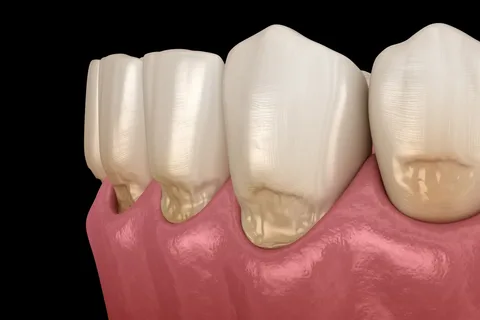
- Small, soft concavities (like "bowls") especially on inner faces or smooth surfaces, without the rough appearance typical of caries.
- Gradual color change towards a more yellowish tone (not because the tooth is "dirty", but because more of the dentin is visible). dentaid.es+1
A helpful clue: the dental erosion It is usually more "uniform" and smooth; caries usually starts in retentive areas (fissures, between teeth) and can appear more localized.
If any of these points sound familiar, a check-up is recommended: a consultation can assess the wear pattern and determine if the main factor is acid, brushing, bruxism, or a combination.
External causes (diet and habits) that accelerate wear and tear
The most common external cause of dental erosion It's the frequent exposure to acids in the mouth. It's not just "drinking soda," it's the frequency and duration of contact.
Typical habits that trigger dental erosion:
- Drinking acidic beverages "in sips" for hours (soft drinks, energy drinks, kombucha, certain commercial cold teas, citrus juices).
- Drink lemon water every day and keep it in your mouth.
- Consume vinegars/pickles very frequently and then brush your teeth hard.
- “Snacking” on acidic fruit many times a day (for example, repeated citrus fruits) without giving saliva time to buffer the pH. Vithas+1
Two important points:
- The amount It matters, yes, but the frequency It usually matters more.
- Nail polish doesn't "melt" in a day: dental erosion It's cumulative. That's why some people notice it all at once, when the structure has already been lost.
Internal causes (reflux, vomiting) that many do not associate with the mouth
When the acid comes from within (gastric acid), the dental erosion It can be especially aggressive. Typical situations include:
- Gastroesophageal reflux (with or without obvious heartburn).
- Frequent vomiting due to a medical cause.
- Eating disorders (a sensitive but clinically relevant topic). Vithas+2 Guitián Clinic+2
Here's a practical tip: if you suspect reflux, it doesn't make sense to just "fix" the teeth. You can protect the enamel, yes, but dentists usually recommend consulting a doctor about the underlying cause if the reflux is frequent, because otherwise, the dental erosion tends to follow.
The role of saliva, pH, and why time is your ally
Saliva is not a minor detail: it is one of the great protectors against the dental erosion.
- Neutralizes acids.
- It provides minerals (remineralization process).
- It creates a protective film over the enamel.
When there is dry mouth (due to medication, mouth breathing, stress, certain conditions), the dental erosion It tends to progress faster because the enamel spends more time "unprotected". KIN+1 Laboratories
Therefore, in addition to "avoiding acids", it often works better to think like this: reduce acidity peaks and increase recovery windows.
Common brushing mistakes that worsen tooth erosion
This point greatly changes the forecast: brushing time.
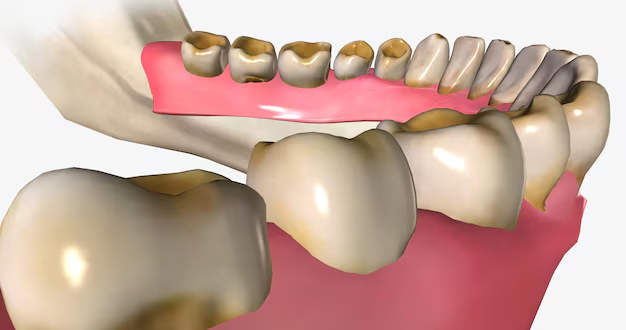
After exposure to acid (soda, citrus, vomit, or reflux), enamel is temporarily softer. If you brush hard immediately afterward, you can add abrasion to a weakened surface, and the dental erosion It progresses faster. The recommendation that is repeated in clinical sources is wait a while before brushing, and prioritize rinsing with water or a protective measure indicated by the professional. Guitian Clinic+1
Other typical blunders:
- Hard brush or excessive pressure.
- Highly abrasive “whitening” toothpastes without indication (not always, but in compromised enamel it can worsen).
- Aggressive horizontal brushing in the neck area of the tooth.
If you also have sensitivity, a check-up can help you choose a realistic guideline and a suitable type of paste.
How is it diagnosed in the office and what to look for at home?
In clinical practice, the dental erosion It is diagnosed by:
- Pattern exploration (affected areas, brightness, concavities).
- History of diet, beverages, reflux and hygiene habits.
- Intraoral photographs to compare evolution.
- Risk assessment: saliva, habits and, if applicable, bruxism wear.
At home you can observe trends, but without becoming obsessed:
- If you notice that the edges of your front teeth are becoming more and more visible.
- If sensitivity increases over time.
- If you see smooth surfaces that look "polished" in areas that previously had more relief.
If what you see worries you, the most useful thing is a professional assessment and, in many cases, simple preventative measures.
Realistic prevention of dental erosion without living in fear of acid
Prevent the dental erosion It's not about eliminating all acid. It's about making it sustainable.
Habit changes that usually work
- If you drink acidic beverages, it's best to do so at specific times and not for hours at a time.
- Avoid keeping the liquid in your mouth.
- Water afterwards can help to “wash away” acid.
- If there is reflux, don't normalize it: treating it reduces internal damage.
- Periodic checkups to detect the dental erosion before it requires more extensive treatment.
And if you want to reinforce general oral health prevention, in the clinic it usually makes sense to accompany it with a dental cleaning and check-up periodic to monitor plaque and detect early changes. Acedo Dental Clinic
It also helps to understand that the plate (and the dental biofilm) complicates the picture: it does not cause erosion on its own like cavities, but it can aggravate inflammation and sensitivity, and make it more difficult to maintain a good routine. Acedo Dental Clinic
Treatments used according to severity
The dental erosion It's not "cured" by making the enamel grow back as it was. What is done is:
- Stop the cause.
- Protect and reinforce what remains.
- Restore structure if there is already significant loss.
Depending on the situation, the plan usually includes:
Protective and sensitivity control measures
- Specific toothpastes for sensitivity and enamel protection.
- Professional applications of fluoride or other protective agents according to clinical criteria.
- Hygiene adjustments to avoid further damage to the sensitive area.
Conservative restorations
When tooth structure has already been lost, adhesive materials can be used to restore shape and protect exposed dentin. This helps reduce sensitivity and the risk of fractures in weakened teeth.
Aesthetic and functional rehabilitation
In advanced cases, more extensive rehabilitation may be required (depending on the teeth, bite, and amount of structure lost). The goal here is not just to "look good," but to ensure the tooth remains intact and doesn't continue to deteriorate.
If there is also gum involvement or associated inflammation, assessing the periodontal health is also part of the approach. A good starting point is understanding what the periodontics and when it is appropriate to assess it. Acedo Dental Clinic
Typical cases and what I would do differently in each one
To make sure this isn't just theory, here are some common scenarios of dental erosion and the approach that usually makes sense:
“I sip energy/acidic drinks all day long.”
Focus: reduce frequency, concentrate consumption, rinse with water afterwards, wait before brushing, and consider additional protection if sensitivity is already present.
“I have reflux at night”
Approach: Medical management of reflux + dental measures. If reflux persists, the dental erosion usually follows.
“I brush my teeth really hard because I want whiter teeth.”
Focus: technique and tools. If erosion is also present, pressure can worsen the wear. If the goal is aesthetic, it's best to follow a plan rather than relying on abrasion. An informative resource, if you're interested in the aesthetic aspect without damaging the enamel, is to research options and practices (for example, clinical guidelines on whitening and its limitations). Acedo Dental Clinic
“My gums are receding and I’m noticing increased sensitivity.”
Retraction is not erosion, but it contributes to it. Root exposure changes the type of sensitivity and may require a combined approach. You can learn more about this. receding gums if it fits your case. Acedo Dental Clinic
Patient's opinion
“I came in because the cold was bothering me more and more, and I thought it was cavities, but they told me it was dental erosion. What helped me most was understanding my habits: drinking lemon water daily and brushing right after. In just a few weeks, the sensitivity decreased significantly, and with the treatment they prescribed, I noticed I was no longer afraid to drink cold water.”
Frequently asked questions about dental erosion
Can dental erosion be repaired or does the enamel grow back?
The enamel lost due to dental erosion It doesn't regenerate as such. What can be done is to slow its advance, promote the remineralization of incipient areas, and protect or restore structure where loss has already occurred. KIN+1 Laboratories
How do I know if I have dental erosion or cavities?
Tooth decay is usually associated with bacterial activity and more localized lesions, often in fissures or between teeth. dental erosion It usually results in smoother surfaces and a pattern related to external acids or internal reflux. Clinical examination provides definitive confirmation.
Does lemon water cause tooth erosion?
Taking it frequently may increase the risk of dental erosion due to the acidity, especially if it remains in the mouth or is repeated many times a day. The risk depends on frequency, habits, and salivary protection. BordonClinic+1 Dental Clinic
Does brushing my teeth right after eating acidic food worsen tooth erosion?
It can worsen the condition because the enamel is temporarily more vulnerable after exposure to acid. It's usually recommended to wait a while and rinse with water before brushing. Guitian Clinic+1
Does dental erosion cause bad breath?
Not necessarily. bad breath It's more related to plaque, biofilm, tongue, and gum health. But if there's sensitivity or wear, some people change their hygiene habits, and that can indirectly influence it.
Does dental erosion affect children or adults more?
It can occur in both. In adults, it is frequently associated with dietary habits and reflux; in young people, frequent consumption of acidic beverages may be a contributing factor. The risk depends on exposure to acids and protective factors (saliva, habits). BordonClinic+1 Dental Clinic
Which toothpaste is best if I have dental erosion and sensitivity?
A toothpaste formulated for sensitive teeth and enamel protection is usually recommended, and harsh abrasives should be avoided if there is wear. The specific choice depends on the individual case and should be personalized after an examination. Guitian Clinic+1
Can dental erosion cause fractures?
Yes, because by losing enamel and exposing dentin, the tooth can weaken and become more susceptible to chipping or fracturing over time, especially if there are high biting forces or combined wear. centrobranemarklaspalmas.com+1
What to do today to slow down wear and tear and protect your smile
If you suspect dental erosion, The smartest strategy is simple: reduce repeated acid exposure, avoid brushing immediately afterward, and request an evaluation to determine if the cause is external (habits) or internal (reflux). The earlier it's detected, the more conservative the treatment tends to be, and the easier it is to avoid persistent sensitivity, tooth structure loss, and the need for more extensive restorations. If you want to conclude with a practical step, schedule a checkup and bring a short list of your habits (drinks, citrus fruits, reflux, brushing): with that information, the diagnosis is usually much clearer.
📍 Tirso de Molina Street, 22, Seseña
📍 Calle Abanico, 10, Local 1, El Barco de Ávila
📞 669 95 66 58
📞 606 886 468
📧 info@acedodental.com
🌐 clinicasacedodental.com
Make your appointment today and discover the power of a well-groomed smile.
