
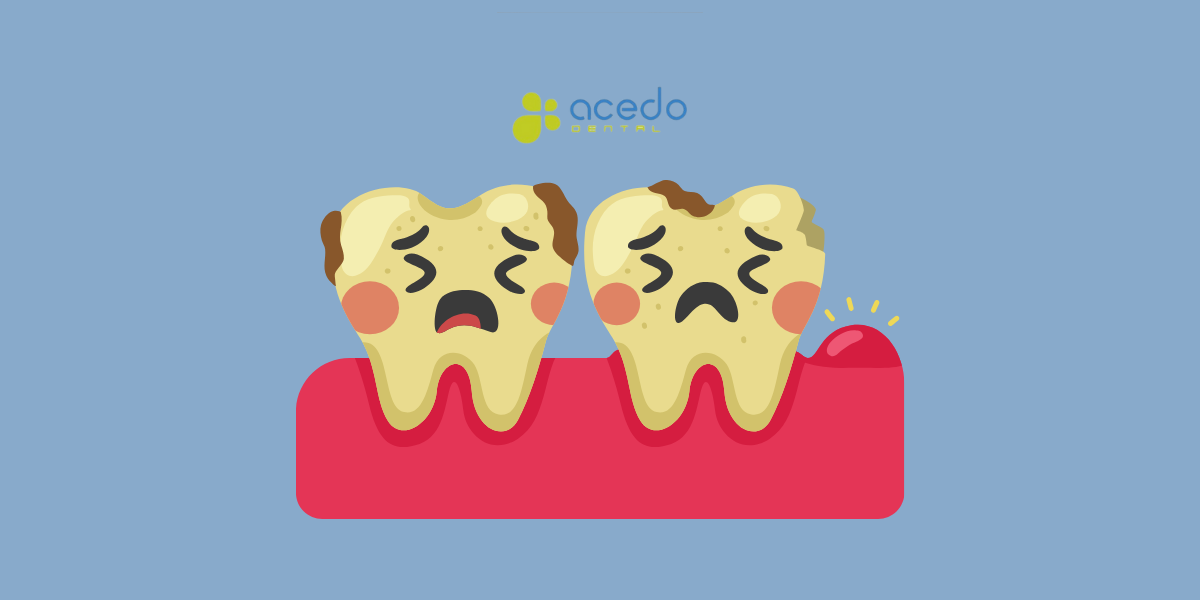
Dental staining refers to changes in tooth color (stains or discolorations) caused by external factors (diet, tobacco, hygiene) or internal factors (genetics, medications, trauma, aging). These stains are classified as extrinsic (superficial) and intrinsic (internal), and affect aesthetics. They are treated with cleanings, whitening, or more complex treatments depending on their origin.
If you look in the mirror and notice that your smile "isn't the same anymore," it's very likely you're seeing the cumulative effect of... dental stains. The good news is that many dental stains They have solutions, and even better, many can be prevented with simple changes. In this article, I'll explain it all: what types there are, how to distinguish them, what really works to get rid of them (and what doesn't), and how to maintain results long-term. If you'd like to learn more from another perspective, you can read What are dental stains? and also this guide on Dental staining: causes and treatments. Then come back here, because we're going to bring this down to earth with examples and practical decisions.
In the end, you'll be left with a very concrete idea: Not all tooth stains are removed the same way., And getting the origin right (extrinsic vs intrinsic) saves time, frustration, and money.
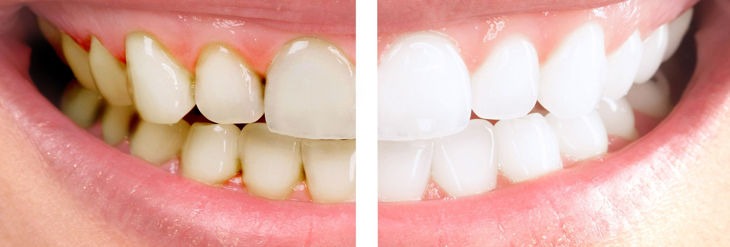
What are they and why don't they all look the same?
The dental stains They are not simply an "ugly color." They are a visible sign that something has been deposited on the surface of the tooth, or that the color has changed from within.
- When the stain is on the surface, it is often said of extrinsic dental stains. They are related to pigments from food/beverages, tobacco, or plaque and tartar that trap dyes.
- When the color change is in the internal structure, We're talking about intrinsic dental stains. They tend to be more persistent and sometimes do not "disappear": they camouflage themselves or are treated with more advanced options.
This explains why two people with "similar" spots are offered different treatments.
The most common dental stains
The extrinsic dental stains These are the typical spots that appear over time due to everyday habits. They usually look like:
- Yellow/dark tone in areas close to the gum.
- Brown stains in grooves or between teeth.
- "Dull" appearance even after brushing your teeth.
What usually causes them
- Coffee, tea, red wine, dark soft drinks.
- Tobacco.
- Plaque and tartar (not only because of "dirt", but also because of areas you can't reach well with the brush).
How to remove them effectively
Here's one idea: If it's extrinsic, the first step is usually professional hygiene..
- Professional cleaning and polishing: removes plaque, limescale and many surface stains.
- Specific polishing (e.g., air polishing as clinically indicated)In professional hands, it can improve persistent surface stains.
At this point, this is especially relevant: if you're seeing stains caused by habits, before considering whitening, it makes sense to check the underlying cause. You can find more information on... dental cleaning and check-up.
When the color comes “from within”
The dental stains Intrinsic ones are the ones that generate the most doubts because they tend to resist the typical "I'll do a cleanse and that's it" approach.
Clues that they may be intrinsic:
- Uniform grayish or brownish coloration.
- Bands or spots that appear "inside" the tooth.
- Teeth that have changed color after a blow, root canal, or due to certain medications.
Typical causes
- Medication (the classic case: tetracyclines, especially if the exposure was during tooth formation stages).
- Trauma.
- Aging (the enamel wears down and the dentin becomes more transparent, making the tooth more "yellow").
- Genetic factors.
What options are available?
There's no magic here: it depends on the degree and the cause.
- professional whitening: may help in some cases and degrees (for example, certain mild tetracycline stains may improve, although it does not always equal 100%).
- Veneers or aesthetic restorations: when the objective is not to “clarify” but cover/camouflage the internal color and achieve a uniform tone.
If you're interested in the topic of teeth whitening in the clinic (what to expect and what not to expect), you can see teeth whitening or this more comprehensive guide: Teeth whitening: the definitive guide.
Dental stains and “white spots”: they are not the same thing
Not everything that looks like a stain falls into the same category. For example, white spots (opaque) teeth can have different causes (demineralization, fluorosis, etc.) and the treatment varies: from microabrasion to veneers in some cases, and whitening when appropriate.
If this happens to you, check out this internal resource: white spots on teeth.
How to tell if you have tooth staining
A diagnosis cannot be made based on text alone without a clinical examination, but you can use a helpful mini-checklist to guide you:
- Does anything come off when you gently scratch with your fingernail or when you use thread/brush? Sometimes it suggests a surface component.
- Does it concentrate near the gum line or between the teeth? Frequent in extrinsic + plaque/tartar.
- Did the entire tooth change color? Think about intrinsic or internal causes (trauma, endodontics, etc.).
- Is there a clear history? Tobacco/heavy coffee → extrinsic; tetracyclines/trauma → more likely intrinsic.
When in doubt, the sensible thing to do is start with the most conservative approach: professional cleaning and a checkup. If removing plaque/tartar significantly improves your smile, then you have your answer.
To delve deeper into the more "battle-hard" approach to stains, here's another helpful internal link: stains on the teeth.
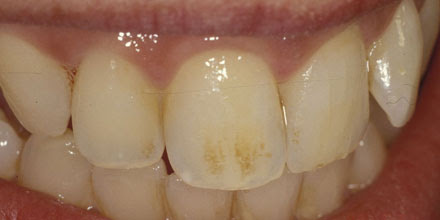
Treatments for tooth staining
I'm going to order this from least to most "interventionist", because many people here make the mistake of going straight to the most aggressive.
Professional hygiene for dental staining
It's step one in many cases of dental stains extrinsic.
- Removes color-retaining deposits.
- It improves the surface so that, if there is bleaching afterwards, it will be more homogeneous.
- It gives you a real picture of the "base" color of the tooth.
Professional teeth whitening for dental stains
It works best when:
- The stain is light/moderate.
- There is a component of aging or general staining.
- We are not facing very marked internal changes.
Important: teeth whitening it doesn't "look"“ The tooth clarifies through a chemical reaction in dental structures.
Veneers and restorations for tooth staining
It makes sense when:
- There is intrinsic dental stains that do not respond well to bleaching.
- You want a very controlled result in shape/tone.
- There are also aesthetic defects that should be corrected (fractures, wear, etc.).
“Home remedies” and miracle products: The real problem
"Ultra-whitening" toothpaste, activated charcoal, lemons, baking soda galore... the risk is simple: abrasion and sensitivity, and in the worst case, enamel damage. If something promises whiter skin "in 48 hours" without follow-up, be suspicious.
If you want real and controlled results, the sensible thing to do is to stick to the treatments that a clinic can recommend after seeing your case.
How to prevent them from coming back
This is where you win. The treatment removes the dental stains, But your habits decide whether they return in 3 months or in 3 years.
Habits that help most against tooth staining
- Effective brushing (technique + consistency, not just "doing it quickly").
- Interdental cleaning (floss or interproximal brushes).
- Reduce exposure to pigments (or at least compensate): frequent coffee and tea, red wine, etc.
- If you smoke, assume that tobacco is a factory of dental stains.
How often should I get a cleaning to control tooth staining?
The general recommendation that you will see repeated in clinical practice and in popular science usually revolves around every six months, adjusting according to risk (gums, orthodontics, smoker, etc.).
It's not a "whim": it's maintenance. And for many people, it's the difference between having dental stains visible or maintain a stable smile.
Signs that tooth staining is not just about aesthetics
Although we talk a lot about appearance here, sometimes the dental stains They live with underlying problems:
- Bleeding when brushing (gum inflammation).
- Bad breath persistent.
- Rapid accumulation of tartar.
If this happens to you, the priority isn't "whitening" your teeth, but rather checking your gum health and habits. If you'd like more information on hygiene, you can read this internal article: Get rid of bad breath (because plaque, tartar, and aesthetic problems often go hand in hand).
What to ask for on a first visit to get straight to the point
If you go to a consultation because dental stains, A useful visit typically includes:
- Assessment of probable origin (extrinsic vs intrinsic).
- Photo/record of the initial tone.
- Professional hygiene if applicable.
- Stepped treatment plan (first conservative, then advanced aesthetic if necessary).
If you want to see the general approach to available options, here's the page for dental treatments.
Patient's opinion
“I had quite pronounced tooth stains from coffee and tobacco. I thought whitening alone would solve the problem, but first they gave me a cleaning and I already noticed a huge difference. Then we considered whitening and it made my teeth much more uniform. What I appreciated most was that they clearly explained what kind of tooth stains I had and why the treatment plan was done in phases.”
Frequently asked questions about tooth staining
What is the difference between extrinsic and intrinsic tooth staining?
The extrinsic dental stains They are on the surface of the enamel and are usually related to habits (diet, smoking, hygiene). intrinsic dental stains They affect the internal structure of the tooth (enamel/dentin) and usually require more complex or camouflage treatments.
Does dental cleaning remove all tooth stains?
No. Cleaning can remove many dental stains Superficial (extrinsic) deposits such as plaque and tartar are present, but intrinsic deposits do not usually "disappear" with hygiene; other options are considered.
Does teeth whitening work for tetracycline staining?
Sometimes it works, especially in mild cases, but it doesn't always achieve complete uniformity. In severe cases, combining strategies or resorting to aesthetic restorations is considered.
Do tooth stains return after whitening?
They can return if the factors that cause them persist (tobacco, frequent coffee/tea consumption, poor hygiene). That's why maintenance and, when necessary, regular cleanings are key.
Which foods and drinks are most likely to cause tooth staining?
Coffee, tea, red wine and some highly pigmented foods (red fruits, beets) are often highlighted, especially if consumption is frequent and hygiene is not a factor.
Can I remove tooth stains at home without going to the dentist?
You can reduce some of the dental stains Extrinsic stains can be prevented with good hygiene and habits, but when tartar/adherent stains are present or intrinsic stains are suspected, a professional evaluation is advisable. Abrasive "remedies" can worsen sensitivity or enamel damage.
How often should I get a cleaning if I tend to get tooth stains?
As a general guideline, many recommendations place professional cleaning around every six months, adjusting according to risk (smoker, orthodontics, gums, tendency to tartar).
Are veneers the only solution for internal tooth staining?
Not always, but they are a frequent option when the dental stains Intrinsic hair does not respond well to whitening or when a very controlled result in tone and shape is sought.
The key idea for solving tooth stains sensibly
If you have to keep just one thing, let it be this: the dental stains They aren't treated "by intuition," they're treated by their cause. Many blemishes resolve very well starting with a professional cleaning and check-up; others need whitening; and a percentage require more advanced cosmetic solutions to camouflage internal changes. If you want the results to be good and long-lasting, the winning plan is almost always phased: first health and hygiene, then cosmetics.
Book your appointment today and wear a smile healthy, without discomfort and radiant to be proud of.
How can I book my appointment?
Booking your free appointment is very simple:
If you are in Seseña:
- Address: Calle Tirso de Molina 22, 45223 Seseña
- Phone: 669 956 658
If you are in El Barco de Ávila:
- Address: C. del Abanico, 10, Local 1, 05600 El Barco de Ávila, Ávila
- Phone: 606 886 468
Our customer service team will assist you with kindness and help you schedule your appointment at a time that best suits you.
We will wait for you!
